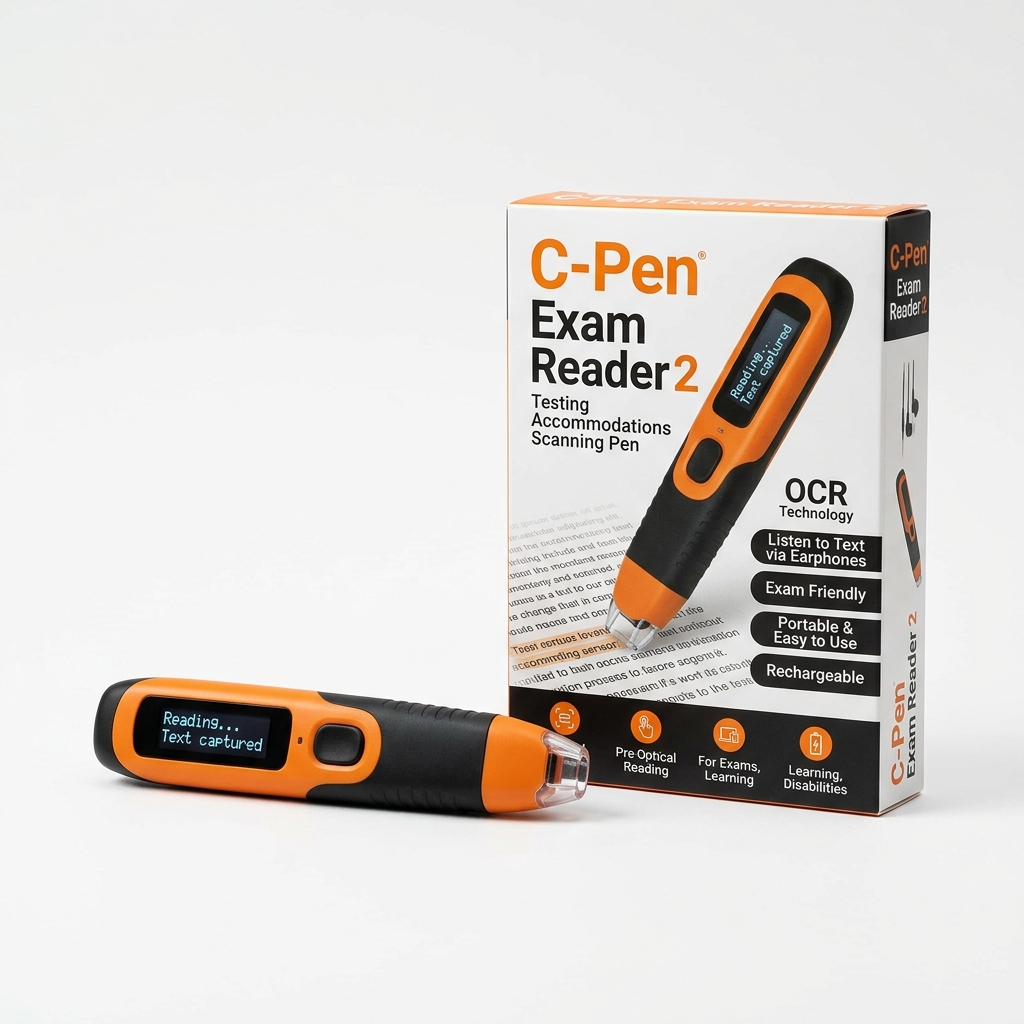
Can You Get Insurance or Medicaid to Cover a Scanning Pen?
Yes. Assistive reading pens—such as the C-Pen Reader 2, Reader 3, C-Pen Lingo 3, and Scanmarker Max—can qualify as medically necessary assistive technology (AT) or durable medical equipment (DME), making them eligible for health insurance reimbursement, Medicaid coverage, or school district procurement.
When prescribed by a licensed healthcare or educational provider (such as a Speech-Language Pathologist, Occupational Therapist, Neuropsychologist, or Pediatrician), scanning pens meet established medical necessity criteria by compensating for neurodevelopmental deficits in decoding and reading comprehension.
Who Qualifies for Coverage?
Reimbursement and funding pathways typically cover individuals facing documented barriers to functional literacy:
• Documented Reading & Learning Disabilities: Individuals diagnosed with developmental dyslexia, specific learning disorder in reading (SLD), dysgraphia, or reading comprehension deficit.
• Students with Active IEPs or 504 Plans: K–12 and college students whose educational accommodation plans identify assistive technology as necessary for accessing standard curriculum materials.
• Attention Deficit Hyperactivity Disorder (ADHD): Individuals whose executive functioning and working memory constraints cause severe reading fatigue and comprehension breakdown.
• Neurological & Sensory Impairments: Patients recovering from traumatic brain injury (TBI), stroke, or those managing visual processing deficits requiring auditory reading supplementation.
Legal Justification: Why Scanning Pens Qualify
Assistive reading devices are recognized under major federal and state healthcare statutes:
• IDEA (Individuals with Disabilities Education Act): Mandates that public school districts provide assistive technology devices and related services at no cost to families whenever required for a Free Appropriate Public Education (FAPE).
• ADA (Americans with Disabilities Act) & Section 504: Protects the right to reasonable accommodations in higher education and workplaces, establishing that assistive reading pens enable equal access to written documents.
• Medicaid EPSDT Benefit: The Early and Periodic Screening, Diagnostic, and Treatment (EPSDT) mandate requires Medicaid to cover any medically necessary service or assistive device that ameliorates a child's physical, sensory, or mental condition.
Required Documentation Checklist (The LMN Packet)
To secure approval from private health insurance carriers or state Medicaid programs, submit a comprehensive medical necessity packet including:
1. Letter of Medical Necessity (LMN): Authored and signed by a licensed provider (SLP, OT, or MD) detailing the patient's diagnosis, specific reading limitations, and why lower-tech solutions (like reading rulers or audiobooks) are inadequate.
2. Standardized Clinical Assessments: Recent psychoeducational or speech-language evaluation reports (such as CTOPP-2, WJ-IV, GORT-5, or WIAT-III) demonstrating decoding scores substantially below chronological age norms.
3. Device Trial Documentation: Objective data showing improved reading fluency, reduced cognitive fatigue, and increased task accuracy during a clinical trial with the reading pen.
4. Itemized Vendor Quote & Device Specifications: Official invoice or spec sheet specifying the exact device model (e.g., C-Pen Reader 2), warranty, and educational pricing.
Common CPT & Billing Codes for Assistive Technology
Healthcare providers use specific Current Procedural Terminology (CPT) and Healthcare Common Procedure Coding System (HCPCS) codes when evaluating clients and billing for assistive devices:
| Code | Type | Description | Application |
|---|---|---|---|
| CPT 97755 | Clinical Evaluation | Assistive technology assessment (per 15 minutes) | Used by SLPs/OTs to evaluate the patient with the scanning pen |
| CPT 97535 | Therapy & Training | Self-care / home management training using assistive devices | Covers training the patient and family on device operation |
| CPT 97537 | Reintegration | Community / work reintegration training involving AT | Used for workplace, vocational, or higher-education training |
| HCPCS E1399 | DME Hardware | Durable medical equipment, miscellaneous / unclassified | Commonly utilized code when requesting insurance hardware reimbursement |
| HCPCS V5299 | Communication Device | Assistive communication / sensory aid, not otherwise specified | Alternative code used by speech-language clinics for assistive reading aids |
Step-by-Step Approval & Purchasing Roadmap
Follow these practical steps to navigate the funding process successfully:
• Step 1: Schedule an Assistive Technology Evaluation with your licensed SLP, OT, or school AT specialist.
• Step 2: Request an IEP or 504 Meeting if purchasing through school district funding. Under IDEA Part B, schools frequently purchase classroom packs directly via purchase orders.
• Step 3: Obtain a Formal Letter of Medical Necessity (LMN) from your provider with clear functional objectives.
• Step 4: Submit a Prior Authorization Request to your private insurance carrier or state Medicaid plan alongside the vendor quote.
• Step 5: Appeal If Denied. First-round denials are common. Submit peer-reviewed clinical data and trial notes illustrating immediate improvement with the pen.
• Immediate FSA / HSA Option: If insurance approval is delayed, scanning pens prescribed for dyslexia are eligible for pre-tax Flexible Spending Account (FSA) and Health Savings Account (HSA) reimbursement when accompanied by an LMN.
Shop Eligible Assistive Reading Pens on Amazon
Purchase authentic assistive reading pens with itemized receipts suitable for HSA/FSA or insurance claim reimbursement: